
T cells, NK cells, and the antioxidant link that immunology has studied for decades.
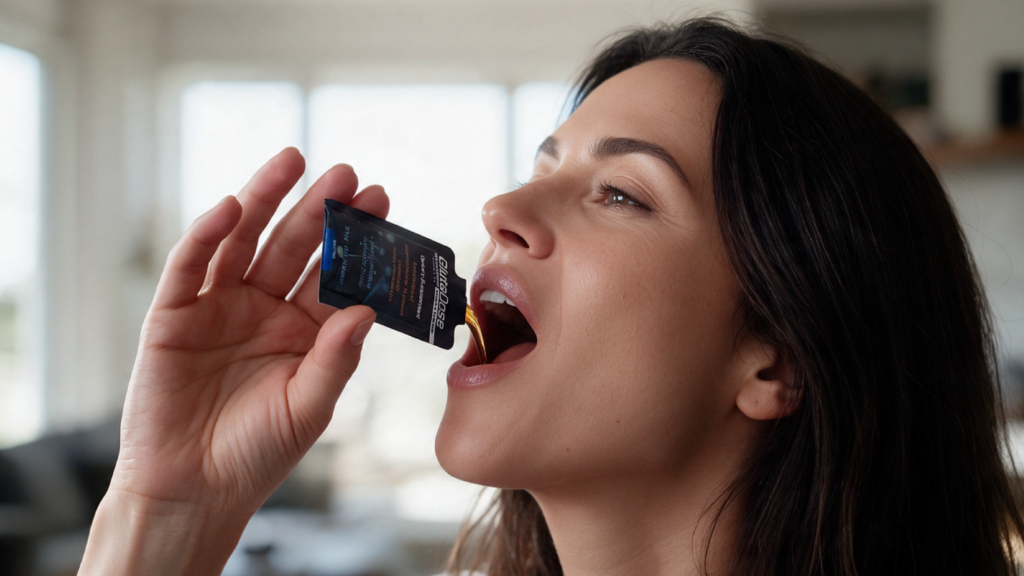
How are glutathione and the immune system connected? In short, your immune cells need glutathione to work well. In fact, research on this topic dates back to the early 1990s. In this guide, you will learn what science says and how to maintain healthy levels every day.
Key takeaways
- Glutathione (GSH) is the main antioxidant your own cells produce.
- T cells and NK cells are especially sensitive to glutathione levels.
- When glutathione drops, their function declines in measurable ways in laboratory studies.
- Therefore, maintaining healthy levels consistently is key.
What is glutathione, and why does it matter for your defenses?
Glutathione is a molecule your body makes from three amino acids. Moreover, it is present in all your cells, including your immune cells. To learn more, read our guide What is glutathione?.
When your defenses activate, immune cells generate intense oxidative activity. As a result, they need glutathione to keep that activity under control and stay precise.
What does research say about glutathione and the immune system?
A landmark review in Proceedings of the Nutrition Society (Dröge and Breitkreutz, 2000) explained the basis of this connection. According to the authors, several key immune functions are especially sensitive to low glutathione:
“IL-2-dependent functions, including T cell proliferation, the generation of CD8+ blasts, T cell cytotoxicity, and natural killer cells, are particularly sensitive to glutathione depletion.” — Dröge and Breitkreutz, Proc Nutr Soc, 2000
In other words, when glutathione runs low, immune cells work less efficiently.
Which immune cells depend on glutathione?
T cells
T cells multiply quickly when the body detects something foreign. However, that process creates oxidative stress. For this reason, T cells need glutathione to multiply efficiently.
NK (natural killer) cells
NK cells are the body’s first line of defense. For example, a 2023 review in Biomedicines gathered laboratory studies in which glutathione, together with the immune signals IL-2 and IL-12, boosted NK cell activity. Note that this evidence comes mainly from in vitro and animal studies.
Macrophages and dendritic cells
In addition, a 2024 review in the International Journal of Molecular Sciences described what happens when glutathione levels are inadequate. According to the authors, macrophages become less effective at clearing foreign particles, and NK cell activity declines. Communication between immune cells is also affected.
Why does consistency matter?
Your body uses glutathione every day. Furthermore, levels decline with age, stress, intense exercise, and other factors. That is why the most logical approach is to maintain healthy levels daily, not only from time to time. In short, supporting your defenses is a habit, not a last-minute reaction.
What if you use GLP-1 medications?
People on GLP-1 medications, such as semaglutide or tirzepatide, often eat less. As a result, they may get less vitamin C. For example, a 2025 study in Frontiers in Nutrition found that participants using GLP-1 medications consumed, on average, much less vitamin C than recommended.
Vitamin C and zinc support glutathione function in the body. Also, because GLP-1 medications slow digestion, a route that does not depend on the stomach makes sense. That is why GlutaDose® Wellness is ideal for people undergoing GLP-1† treatment.
What options exist to maintain glutathione?
- Liposomal glutathione: better absorption than capsules, although it may cause digestive discomfort in sensitive users.
- Sublingual glutathione: absorbed through the oral mucosa, without passing through the stomach. To compare both, read Sublingual Glutathione vs. Liposomal Glutathione.
- NAC (N-acetylcysteine): a precursor that helps your body make its own glutathione.
- GlyNAC (glycine + NAC): a precursor combination studied in older adults.
How does GlutaDose® Wellness fit in?
Each vial of GlutaDose® Wellness combines glutathione, vitamin C from acerola, and zinc in an exact dose. Therefore, it brings together ingredients that work as a team, in one simple step:
- Helps maintain healthy immune function*
- Supports healthy cell function*
- Increases body energy, reducing fatigue*
Take one vial every morning on an empty stomach, and hold it under your tongue for 10 to 15 seconds. To learn more, read What Is GlutaDose Used For? How It Works.
Always talk to your doctor before combining GlutaDose with any treatment.
Conclusion
In short, the link between glutathione and the immune system has been well documented for more than 20 years. Your immune cells need it to work with precision. Therefore, maintaining healthy levels every day is a simple way to care for your wellbeing.
Scientific references
- Dröge W and Breitkreutz R, “Glutathione and immune function,” Proceedings of the Nutrition Society, 2000, 59(4):595–600, PMID 11115795.
- Abnousian A and colleagues, “Glutathione Modulates Efficacious Changes in the Immune Response against Tuberculosis,” Biomedicines, 2023, 11(5):1340.
- Lin N and colleagues, “The Role of Glutathione in the Management of Cell-Mediated Immune Responses in Individuals with HIV,” International Journal of Molecular Sciences, 2024, 25(5):2952, PMC10932396.
- Johnson B and colleagues, “Investigating nutrient intake during use of glucagon-like peptide-1 receptor agonist: a cross-sectional study,” Frontiers in Nutrition, 2025, 12:1566498.
- Buonocore D and colleagues, “Bioavailability Study of an Innovative Orobuccal Formulation of Glutathione,” Oxidative Medicine and Cellular Longevity, 2016, PMC4663342.
† Are you using GLP-1 (Ozempic, Wegovy) or Tirzepatide (Mounjaro, Zepbound)? These treatments slow gastric emptying. Any supplement that relies on digestion — tablets, and to a lesser extent some liposomal formulas — may absorb more slowly. GlutaDose® Wellness’s sublingual absorption does not depend on that process. Always check with your doctor before combining supplements with these treatments.
*These statements have not been evaluated by the Food and Drug Administration (FDA). This product is not intended to diagnose, treat, cure, or prevent any disease.
GlutaDose® is a registered trademark of NutraDose Labs, LLC, Miami, FL. © 2026